

Sign in

Muscle Check

Losing weight? Check how much muscle you carry.

Weight loss can take muscle as well as fat. Estimate your muscle, body fat and visceral fat for your age in two minutes.

Muscle

Arm and leg muscle (ALMI)

Estimate

8.0kg/m²

Below Avg

More muscle than 25% of men your agesource 1

Limb muscle

25 kg

Arms and legs 45%Organs and core 55%
Why it matters

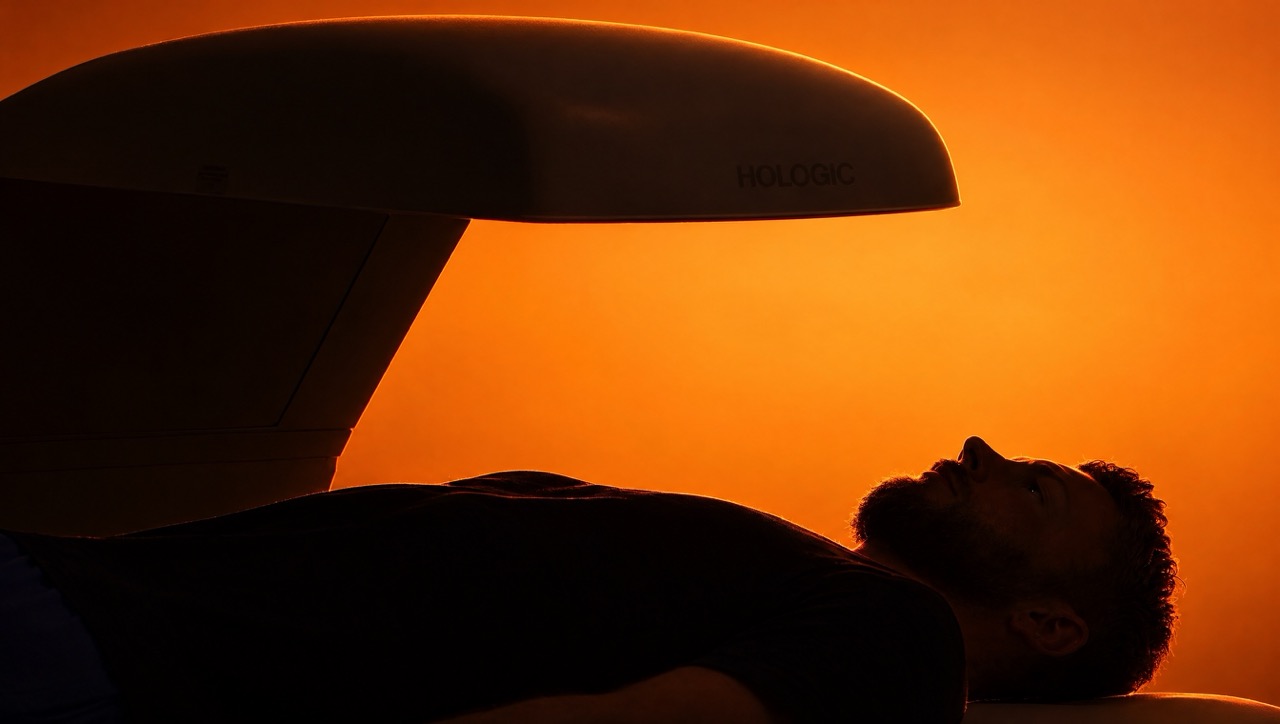
A smart scale's lean mass counts your organs and water too. DEXA weighs your arms and legs on their own, which is where the muscle you train lives.

Left and right balance

DEXA only

Left strongerBalancedRight stronger
Why it matters

63% of men aged 20 to 59 have a gap of 5% or more between their left and right arm or leg. A weaker side is often a sign of one-sided training or an old injury.source 1

Your trajectory to 70

Muscle falls by 3 to 8% every decade from about 30, and faster after 60.source 2

Likely rangeIf nothing changesSarcopenia (7 kg/m²)source 3

Fat

Body fat

Estimate

27%

Avg

Leaner than 51% of men your agesource 1

Visceral fatDeep around your organs

83 cm²

Low riskRisk rises from 100source 4

Subcutaneous fatUnder your skin, the fat you can pinch

21 kg

LessAverage for men your ageMore

Your trajectory to 70

Over two years, fat around the organs rose 5% in women and 3% in men aged around 60, even though their average weight did not change.source 5

Likely rangeIf nothing changes

Your next step

Lose fat, keep muscle

Your estimate puts you ahead of 25% of men your age for muscle and 51% for leanness.

Unlock your next steps

Privacy policy

Population reference: NHANES DEXA scans of US adults aged 20 to 84, all ethnicities.source 1 Body composition percentiles are the survey's own weighted percentiles by age, smoothed across age. Muscle and visceral fat are estimated from your answers with models we fitted to NHANES 2011 to 2018 scans. Visceral fat is a wide-range proxy. All figures are estimates only and do not constitute medical advice, diagnosis, or treatment. Consult a qualified healthcare professional before making changes to your diet or exercise.

Sources

  1. Centers for Disease Control and Prevention. National Health and Nutrition Examination Survey: whole body DEXA, 1999-2006 and 2011-2018. Hyattsville, MD: National Center for Health Statistics. wwwn.cdc.gov/nchs/nhanes

  2. Volpi E, Nazemi R, Fujita S. Muscle tissue changes with aging. Curr Opin Clin Nutr Metab Care. 2004;7(4):405-410. doi:10.1097/01.mco.0000134362.76653.b2

  3. Cruz-Jentoft AJ, Bahat G, Bauer J, et al. Sarcopenia: revised European consensus on definition and diagnosis. Age Ageing. 2019;48(1):16-31. doi:10.1093/ageing/afy169

  4. Després JP, Lamarche B. Effects of diet and physical activity on adiposity and body fat distribution: implications for the prevention of cardiovascular disease. Nutr Res Rev. 1993;6(1):137-159. doi:10.1079/NRR19930010

  5. Whitcher B, Thanaj M, Cule M, et al. Precision MRI phenotyping enables detection of small changes in body composition for longitudinal cohorts. Sci Rep. 2022;12:3748. doi:10.1038/s41598-022-07556-y

  6. Morton RW, Murphy KT, McKellar SR, et al. A systematic review, meta-analysis and meta-regression of the effect of protein supplementation on resistance training-induced gains in muscle mass and strength in healthy adults. Br J Sports Med. 2018;52(6):376-384. doi:10.1136/bjsports-2017-097608